小数的乘法运算
用百格图理解小数乘以小数,积最多三位小数;再掌握“一算、二数、三划”:先按整数相乘,合计两个乘数的小数位,最后从积的右边定位小数点。
按下按钮才会播放语音,页面不会自动播放。
百格图里的小数乘法
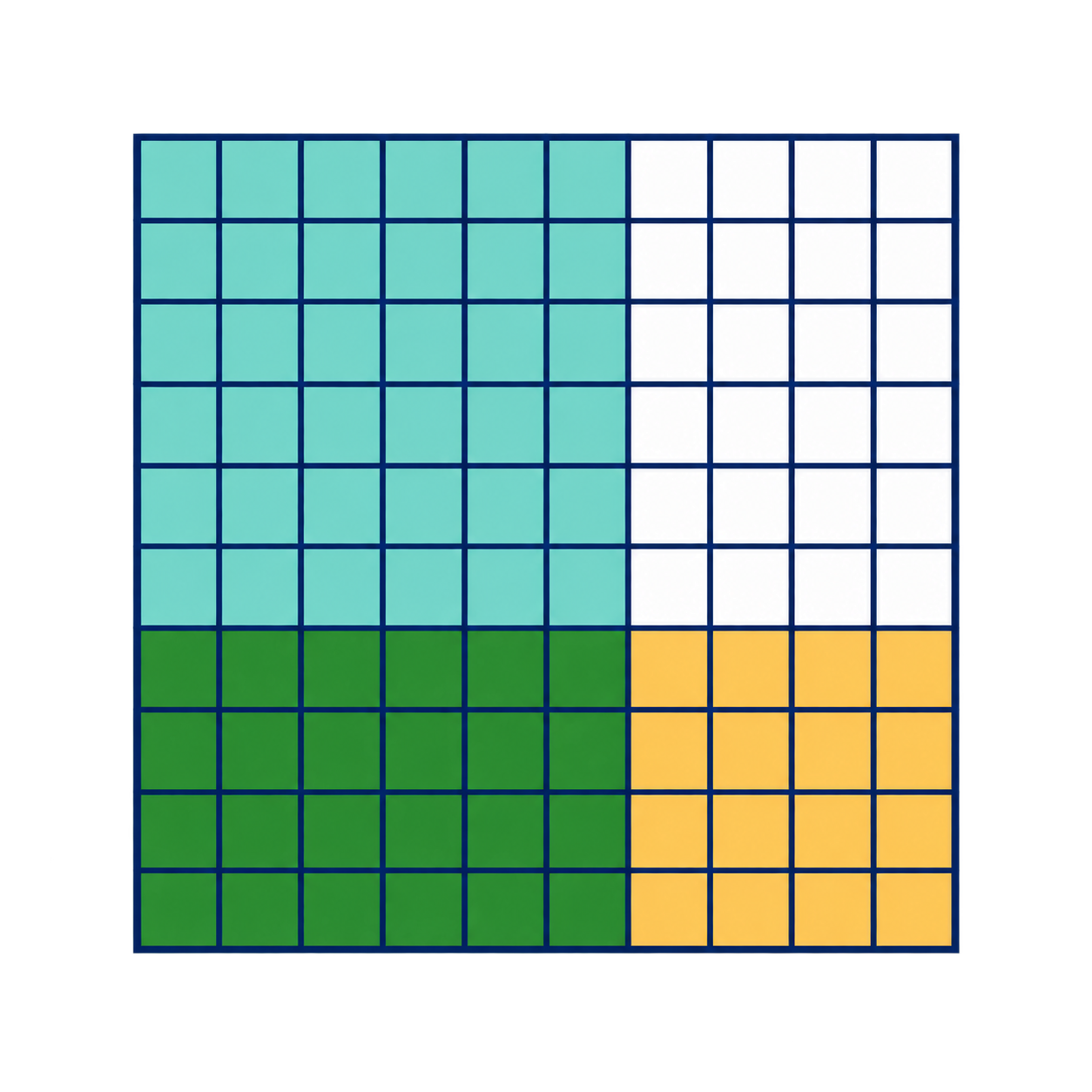
先理解:十分之一乘十分之一
0.6 表示 6 个十分之一,0.4 表示 4 个十分之一。百格图中,6 列与 4 行的重叠部分共有 24 格,每一格是一个百分之一。
6 × 4 = 24
十分之一 × 十分之一 = 百分之一
两个乘数都小于 1,所以积 0.24 也小于每一个乘数。这是检查小数点位置的重要线索。
面积模型 = model luas petak seratus
0.6 ialah 6 persepuluh dan 0.4 ialah 4 persepuluh. Pada petak seratus, 6 lajur dan 4 baris bertindih pada 24 petak kecil, dan setiap petak ialah satu perseratus. Persepuluh darab persepuluh memberi perseratus, maka hasil darab mempunyai dua tempat perpuluhan.
Contoh: 0.3 × 0.7: 3 lajur dan 7 baris bertindih pada 21 petak, jadi 0.3 × 0.7 = 0.21.
Awas: Apabila kedua-dua faktor kurang daripada 1, hasil darab lebih kecil daripada setiap faktor. Jawapan seperti 2.4 jelas terlalu besar.
面积模型 = hundred-square area model
0.6 is 6 tenths and 0.4 is 4 tenths. On a hundred square, 6 columns and 4 rows overlap on 24 small squares, and each square is one hundredth. Tenths times tenths gives hundredths, so the product has two decimal places.
Example: 0.3 × 0.7: 3 columns and 7 rows overlap on 21 squares, so 0.3 × 0.7 = 0.21.
Watch out: When both factors are less than 1, the product is smaller than each factor. An answer like 2.4 is clearly too big.
一算、二数、三划
先算:24 × 13 = 312
小数位:1 位 + 1 位 = 2 位
从右边数 2 位:3.12
小数点不是照直对齐;那是加减法的规则。乘法必须根据两个乘数的小数位总数定位。
一算二数三划 = darab, kira, letak titik
Pertama, abaikan titik perpuluhan dan darab seperti nombor bulat: 24 × 13 = 312. Kedua, kira jumlah tempat perpuluhan dalam kedua-dua faktor: 1 + 1 = 2. Ketiga, kira dari kanan hasil darab sebanyak itu dan letakkan titik perpuluhan.
Contoh: 4.6 × 1.2: 46 × 12 = 552, satu tambah satu tempat perpuluhan = 2, jadi 5.52.
Awas: Dalam darab, titik perpuluhan tidak perlu disusun lurus seperti dalam tambah dan tolak. Kedudukan titik bergantung pada jumlah tempat perpuluhan.
一算二数三划 = multiply, count, place the point
First, ignore the decimal points and multiply as whole numbers: 24 × 13 = 312. Second, count the decimal places in both factors altogether: 1 + 1 = 2. Third, count that many places from the right of the product and put the point there.
Example: 4.6 × 1.2: 46 × 12 = 552, one plus one decimal place = 2, so 5.52.
Watch out: In multiplication the decimal points do not need to line up as they do in addition and subtraction. Where the point goes depends on the total decimal places.
拆开来验算,再处理末尾的 0
把一个乘数拆成整数部分和小数部分,可以用分配律检查竖式答案。
= 1.25 × (2 + 0.4)
= (1.25 × 2) + (1.25 × 0.4)
= 2.5 + 0.5
= 3.0 = 3
拆分验算 = semak dengan hukum kalis agihan
Pecahkan 2.4 kepada 2 + 0.4, darab 1.25 dengan setiap bahagian, kemudian tambah hasilnya. Jawapan ini mesti sama dengan kaedah lazim. Dalam kaedah lazim, 125 × 24 = 3 000 dengan tiga tempat perpuluhan, jadi 3.000; sifar di hujung boleh dibuang selepas titik diletakkan.
Contoh: 2.5 × 1.6 = 2.5 × (1 + 0.6) = 2.5 + 1.5 = 4. Kaedah lazim: 25 × 16 = 400, dua tempat perpuluhan, 4.00 = 4.
Awas: Letakkan titik perpuluhan dahulu, barulah buang sifar. Jika sifar dibuang awal, 3 000 boleh tersilap menjadi 0.3.
拆分验算 = checking with the distributive law
Split 2.4 into 2 + 0.4, multiply 1.25 by each part, then add the results. This must match the standard method. In the standard method, 125 × 24 = 3 000 with three decimal places, giving 3.000; the zeros at the end can go once the point is placed.
Example: 2.5 × 1.6 = 2.5 × (1 + 0.6) = 2.5 + 1.5 = 4. Standard method: 25 × 16 = 400, two decimal places, 4.00 = 4.
Watch out: Place the decimal point first, then drop the zeros. Dropping them too early can turn 3 000 into 0.3 by mistake.
即时理解检查 1
1.7 × 2.4 的答案是多少?
小数乘法 = darab perpuluhan
Untuk 1.7 × 2.4, darab 17 dengan 24 sebagai nombor bulat. Setiap faktor mempunyai satu tempat perpuluhan, jadi hasil darab memerlukan dua tempat perpuluhan dari kanan. Bundarkan kedua-dua faktor kepada nombor bulat terdekat untuk anggaran, kemudian bandingkan dengan pilihan.
Contoh: 1.3 × 2.6: 13 × 26 = 338, dua tempat perpuluhan, jadi 3.38. Anggaran 1 × 3 = 3 menunjukkan 3.38 munasabah.
Awas: Tersilap kira tempat perpuluhan akan mengalihkan titik satu tempat dan menjadikan jawapan sepuluh kali terlalu besar atau terlalu kecil.
小数乘法 = multiplying decimals
For 1.7 × 2.4, multiply 17 by 24 as whole numbers. Each factor has one decimal place, so the product needs two decimal places from the right. Round both factors to the nearest whole number for an estimate, then compare with the choices.
Example: 1.3 × 2.6: 13 × 26 = 338, two decimal places, so 3.38. The estimate 1 × 3 = 3 shows 3.38 is sensible.
Watch out: Miscounting decimal places shifts the point by one place and makes the result ten times too big or too small.
即时理解检查 2
0.25 × 1.2:在省略积末尾的 0 以前,应先把 25 × 12 = 300 写成几位小数?
先定小数位 = tentukan tempat perpuluhan dahulu
Soalan ini bukan meminta hasil akhir, tetapi bilangan tempat perpuluhan sebelum sifar dibuang. Lihat faktor asal 0.25 dan 1.2, kira tempat perpuluhan setiap satu, dan jumlahkan. Bilangan itulah yang digunakan untuk menulis 300 dengan titik perpuluhan.
Contoh: 0.35 × 1.4: 35 × 14 = 490. Dua tambah satu tempat perpuluhan memberi tiga, jadi tulis 0.490 dahulu, kemudian ringkaskan kepada 0.49.
Awas: Jangan kira tempat perpuluhan pada 300 atau pada jawapan yang sudah diringkaskan. Kiraan mesti datang daripada kedua-dua faktor.
先定小数位 = decide the decimal places first
This question does not want the final product but the number of decimal places before the zeros are dropped. Look at the original factors 0.25 and 1.2, count the decimal places in each, and add them. That count tells you how to write 300 with a decimal point.
Example: 0.35 × 1.4: 35 × 14 = 490. Two plus one decimal places make three, so write 0.490 first, then simplify to 0.49.
Watch out: Do not count decimal places in 300 or in the simplified result. The count must come from the two factors.
本课小结
- 百格图能显示十分之一乘十分之一会得到百分之一。
- 先按整数相乘,再合计两个乘数的小数位,最后定位小数点。
- 用拆分法与估算检查;小数点定位后才省略末尾的 0。