成本、售价、盈利和亏损
辨认成本与售价,判断盈利或亏损,再根据金额和百分比找出未知数量。
按下按钮才会播放语音,页面不会自动播放。
先比较成本与售价
成本是取得或制作商品所用的费用;售价是商品卖出时收到的价格。
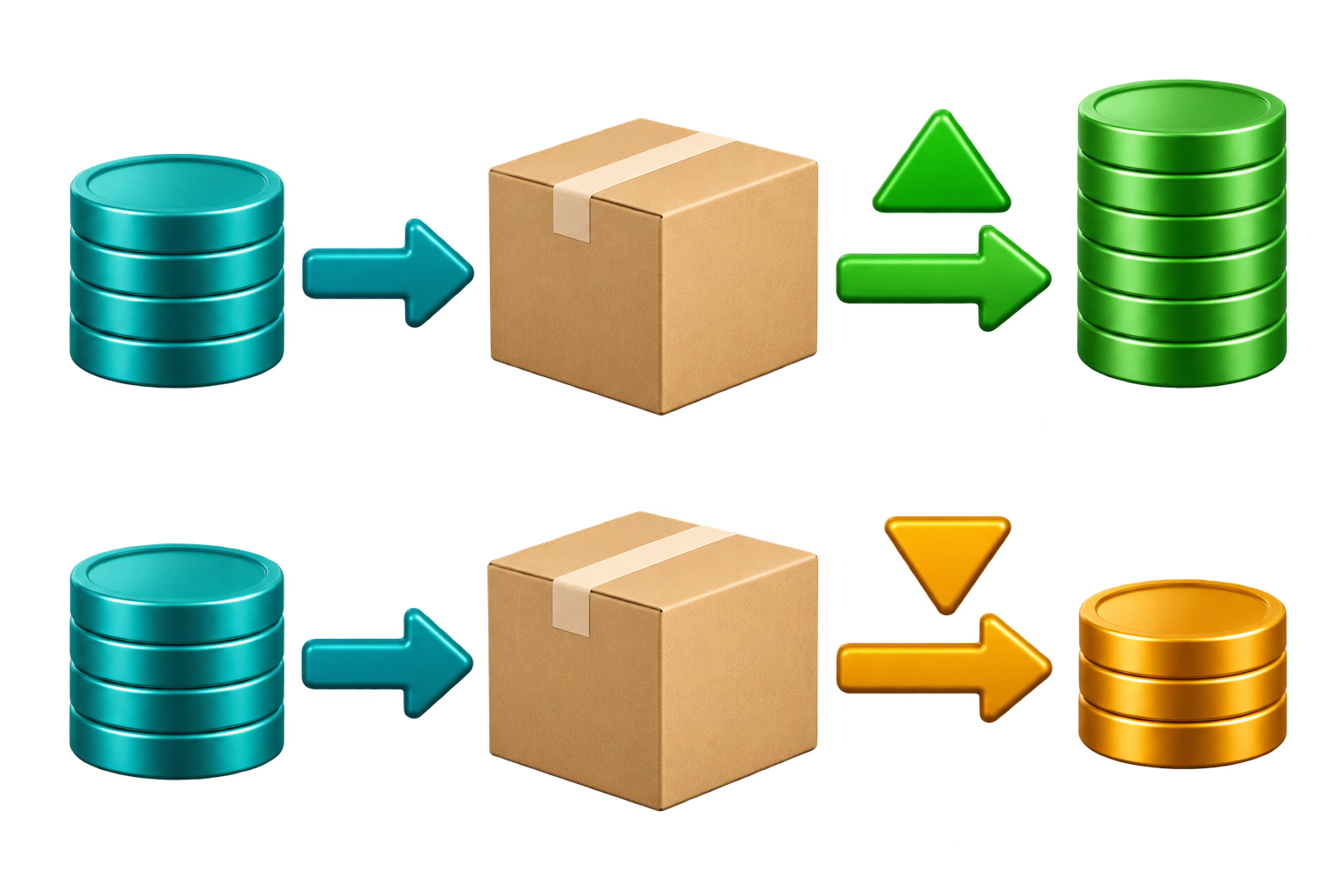
亏损:水瓶成本 RM14.50,售价 RM13.20;亏损 = RM14.50 − RM13.20 = RM1.30。
盈利与亏损 = untung dan rugi
Kos ialah wang yang dibayar untuk mendapatkan atau membuat barang; harga jual ialah wang yang diterima apabila barang dijual. Jika harga jual lebih tinggi, terdapat untung sebanyak bezanya. Jika kos lebih tinggi, terdapat rugi.
Contoh: Sebiji topi berkos RM12.30 dijual pada RM15.00, jadi untung = RM15.00 − RM12.30 = RM2.70. Sebuah mainan berkos RM20.00 dijual pada RM17.40, maka rugi RM2.60.
Awas: Sentiasa tolak nilai yang lebih kecil daripada nilai yang lebih besar. Bandingkan dahulu untuk menentukan untung atau rugi, kemudian cari bezanya.
盈利与亏损 = profit and loss
Cost is what you pay to get or make an item; selling price is what you receive when it is sold. If the selling price is higher, there is a profit equal to the difference. If the cost is higher, there is a loss.
Example: A cap costs RM12.30 and sells for RM15.00, so the profit is RM15.00 − RM12.30 = RM2.70. A toy costs RM20.00 and sells for RM17.40, a loss of RM2.60.
Watch out: Always subtract the smaller amount from the larger one. Compare first to decide whether it is a profit or a loss, then find the difference.
用关系式找出未知金额
总成本:RM360 − RM72 = RM288
每个成本:RM288 ÷ 24 = RM12
反求金额 = mencari nilai yang tidak diketahui
Keempat-empat rumus berasal daripada satu idea: harga jual sama dengan kos tambah untung, atau kos tolak rugi. Jika harga jual dan untung diketahui, tolak untung untuk mendapat kos. Kemudian bahagikan jumlah kos dengan bilangan barang.
Contoh: 15 biji cawan dijual dengan harga RM180 dan jumlah untung RM45. Jumlah kos = RM180 − RM45 = RM135, dan kos sebiji cawan ialah RM135 ÷ 15 = RM9.
Awas: Jangan tambah untung kepada harga jual semasa mencari kos. Semak juga sama ada soalan meminta jumlah kos atau kos sebuah barang.
反求金额 = finding a missing amount
All four rules come from one idea: selling price equals cost plus profit, or cost minus loss. If the selling price and profit are known, subtract the profit to find the cost. Then divide the total cost by the number of items.
Example: 15 cups sell for RM180 with a total profit of RM45. Total cost = RM180 − RM45 = RM135, and one cup costs RM135 ÷ 15 = RM9.
Watch out: Do not add the profit to the selling price when looking for cost. Also check whether the question wants the total cost or the cost of one item.
百分比以成本为 100%
若一件商品以盈利 15% 的价格售出,售价就是成本的 115%。
成本 = RM920 ÷ 1.15 = RM800
盈利 = RM920 − RM800 = RM120
价格再改变后,要用最终售价重新和成本比较,不能因为最初加价就直接判断有盈利。
RM772.80 低于成本 RM800,所以亏损 = RM800 − RM772.80 = RM27.20。
以成本为准 = peratus berasaskan kos
Kos sentiasa 100%. Untung 15% bermakna harga jual ialah 115% daripada kos, jadi bahagikan RM920 dengan 1.15 untuk kembali kepada kos. Apabila harga berubah dua kali, bandingkan harga jual akhir dengan kos.
Contoh: Sebuah beg dijual dengan untung 20% pada harga RM96, jadi kosnya RM96 ÷ 1.2 = RM80. Jika barang berkos RM50 ditanda 110% lalu dikurangkan 10%, harga jualnya RM49.50, iaitu rugi RM0.50.
Awas: Mengambil 15% daripada RM920 dan menolaknya tidak memberi kos, kerana 15% itu berasaskan kos, bukan harga jual.
以成本为准 = percentages based on cost
Cost is always 100%. A 15% profit means the selling price is 115% of cost, so divide RM920 by 1.15 to get back to the cost. When a price changes twice, compare the final selling price with the cost.
Example: A bag sold at a 20% profit for RM96 had a cost of RM96 ÷ 1.2 = RM80. If a RM50 item is marked at 110% and then cut by 10%, it sells for RM49.50, a loss of RM0.50.
Watch out: Taking 15% of RM920 and subtracting it does not give the cost, because the 15% is based on cost, not on the selling price.
即时理解检查 1
一个收纳盒的成本是 RM24.60,售价是 RM31.20。盈利是多少?
求盈利 = mencari untung
Harga jual RM31.20 lebih tinggi daripada kos RM24.60, jadi situasi ini ialah untung. Tolak kos daripada harga jual, susun titik perpuluhan dengan betul dan pinjam daripada ringgit apabila perlu.
Contoh: Sebuah bekas pensel berkos RM17.80 dan dijual pada RM22.10. Untung = RM22.10 − RM17.80 = RM4.30.
Awas: Menambah kedua-dua harga memberi jumlah besar yang bukan untung. Semak lajur sen: 20 sen tolak 60 sen memerlukan pinjaman daripada ringgit.
求盈利 = finding the profit
The selling price RM31.20 is higher than the cost RM24.60, so this is a profit. Subtract the cost from the selling price, lining up the decimal points and borrowing from the ringgit when needed.
Example: A pencil case costs RM17.80 and sells for RM22.10. Profit = RM22.10 − RM17.80 = RM4.30.
Watch out: Adding the two prices gives a large total that is not a profit. Check the sen column: 20 sen minus 60 sen needs borrowing from the ringgit.
即时理解检查 2
一件商品的售价是 RM540,相等于成本的 120%。成本是多少?
成本售价盈亏 = harga kos, harga jual, untung dan rugi
Bandingkan harga jual dengan harga kos untuk menentukan untung atau rugi. Gunakan beza yang betul, dan anggap harga kos sebagai 100 peratus bagi soalan peratus.
Contoh: Jika kos RM10 dan harga jual RM12, perbezaan RM2 ialah untung.
成本售价盈亏 = cost, selling price, profit, and loss
Compare selling price with cost to decide profit or loss. Use the correct difference, and treat cost as 100 percent in percentage questions.
Example: If cost is RM10 and selling price is RM12, the RM2 difference is profit.
本课小结
- 先比较售价和成本,售价较高是盈利,成本较高是亏损。
- 盈利或亏损都是两个价格之间的差。
- 反求未知金额时,先写出完整关系式再代入。
- 百分比题以成本为 100%,价格改变后要重新比较。