折扣、回扣和礼券
认清三种优惠发生的时间与作用,再按照顺序计算实际付款和净支出。
按下按钮才会播放语音,页面不会自动播放。
折扣、回扣和礼券不一样
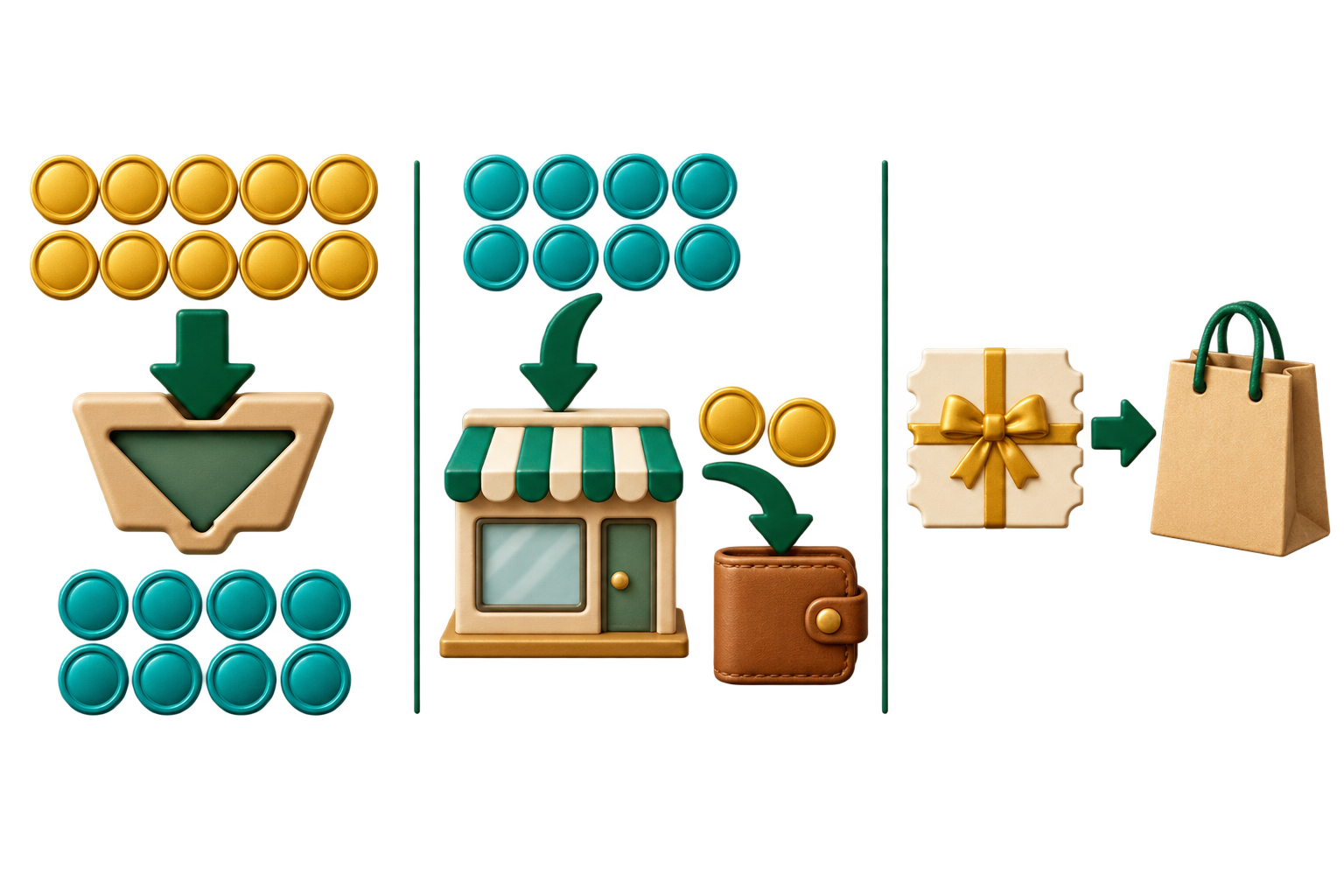
三种优惠 = tiga jenis promosi
Diskaun mengurangkan harga sebelum bayaran, manakala rebat memulangkan sebahagian wang selepas bayaran. Baucar pula hanya boleh digunakan mengikut nilai dan syarat yang dinyatakan. Kenal pasti masa promosi berlaku supaya anda tahu amaun yang perlu dikira.
Contoh: Harga RM100 dengan diskaun 10% menjadi RM90; baucar RM5 kemudian mengurangkan bayaran kepada RM85.
Awas: Rebat bukan diskaun kerana wang dipulangkan selepas bayaran.
三种优惠 = three promotion types
A discount lowers the price before payment, while a rebate returns part of the money after payment. A voucher can only be used according to its stated value and conditions. Identify when each promotion happens so you know which amount to calculate from.
Example: A RM100 item with a 10% discount becomes RM90; a RM5 voucher then reduces the payment to RM85.
Watch out: A rebate is not a discount because it is returned after payment.
折扣先求减价,再求需付
折扣额:RM240 × 15% = RM36
需付:RM240 − RM36 = RM204
也可以直接计算 RM240 × 85% = RM204。
若 RM204 的付款再获得 6% 现金回扣:
净支出:RM204 − RM12.24 = RM191.76
折扣与回扣 = diskaun dan rebat
Kira diskaun daripada harga asal, kemudian tolak amaun itu untuk mendapat harga selepas diskaun. Bagi rebat, gunakan amaun bayaran yang dinyatakan dan tolak rebat untuk mendapat perbelanjaan bersih. Sentiasa semak asas peratus sebelum mendarab.
Contoh: RM240 × 15% = RM36, maka harga selepas diskaun ialah RM240 − RM36 = RM204. Rebat 6% daripada RM204 ialah RM12.24.
Awas: Jangan kira rebat daripada harga asal jika syarat menyatakan bayaran sebenar.
折扣与回扣 = discount and rebate
Calculate the discount from the original price, then subtract it to get the discounted price. For a rebate, use the stated payment amount and subtract the rebate to find net spending. Always confirm the percentage base before multiplying.
Example: RM240 × 15% = RM36, so the discounted price is RM240 − RM36 = RM204. A 6% rebate on RM204 is RM12.24.
Watch out: Do not calculate a rebate from the original price when the terms specify the actual payment.
多种优惠要按发生顺序
每完成一步,下一步就使用新的金额。不要把折扣、礼券和回扣一次全部相加。
折扣后:RM320 × 80% = RM256
使用礼券后付款:RM256 − RM30 = RM226
现金回扣:RM226 × 5% = RM11.30
净支出:RM226 − RM11.30 = RM214.70
优惠顺序 = urutan promosi
Selesaikan setiap promosi mengikut masa ia berlaku dan gunakan amaun baharu untuk langkah seterusnya. Diskaun biasanya dikira dahulu, diikuti baucar, kemudian rebat daripada bayaran sebenar. Menambah semua peratus sekali gus akan menggunakan asas yang salah.
Contoh: RM320 × 80% = RM256; RM256 − RM30 = RM226; rebat 5% ialah RM11.30; perbelanjaan bersih RM214.70.
Awas: Tulis amaun selepas setiap langkah supaya asas seterusnya jelas.
优惠顺序 = promotion order
Process each promotion when it occurs and use the new amount for the next step. A discount is usually calculated first, followed by a voucher, then a rebate based on the actual payment. Adding all percentages together would use the wrong base.
Example: RM320 × 80% = RM256; RM256 − RM30 = RM226; a 5% rebate is RM11.30; net spending is RM214.70.
Watch out: Record the amount after each step so the next calculation base is clear.
即时理解检查 1
一个书包原价 RM150,折扣 20%。折扣后需付多少?
折扣后价格 = harga selepas diskaun
Soalan meminta harga yang perlu dibayar selepas satu diskaun, bukan amaun diskaun sahaja. Cari peratus yang masih perlu dibayar dengan 100% ditolak peratus diskaun, kemudian darab dengan harga asal. Semak bahawa bayaran baharu lebih rendah daripada harga asal.
Contoh: RM80 dengan diskaun 25% meninggalkan 75%; RM80 × 75% = RM60.
Awas: Jangan pilih nilai diskaun sebagai harga akhir.
折扣后价格 = discounted price
The question asks for the amount paid after one discount, not the discount amount alone. Find the percentage still payable by subtracting the discount from 100%, then multiply by the original price. Check that the new payment is lower than the original price.
Example: A RM80 item with a 25% discount leaves 75%; RM80 × 75% = RM60.
Watch out: Do not choose the discount amount as the final price.
即时理解检查 2
顾客付款 RM380 后获得 5% 现金回扣。净支出是多少?
净支出 = perbelanjaan bersih
Soalan memberi amaun yang telah dibayar dan meminta perbelanjaan selepas rebat. Kira rebat daripada bayaran itu, kemudian tolak rebat daripada bayaran asal. Jawapan mestilah sedikit lebih kecil daripada amaun yang dibayar.
Contoh: Rebat 10% daripada RM200 ialah RM20, jadi perbelanjaan bersih ialah RM200 − RM20 = RM180.
Awas: Jangan berhenti selepas mendapat amaun rebat.
净支出 = net spending
The question gives an amount already paid and asks for spending after a rebate. Calculate the rebate from that payment, then subtract the rebate from the original payment. The result should be slightly less than the amount paid.
Example: A 10% rebate on RM200 is RM20, so net spending is RM200 − RM20 = RM180.
Watch out: Do not stop after finding only the rebate amount.
本课小结
- 折扣在付款前减价,回扣在付款后返还部分款项。
- 礼券按使用条件抵扣或兑换,不等于现金找零。
- 折扣以原价为基数;回扣要看题目指定哪一笔付款。
- 多种优惠逐步计算,每一步都使用更新后的金额。