Pelihara Kesihatan Diri
Kesihatan diri dijaga melalui keputusan yang berasas. Kita akan merumus, meramal, mencatat maklumat, menghasilkan syair dan membina ayat dengan kata kerja yang tepat.
pelihara kesihatan = 维护健康
健康决定要有事实根据。先从口头或多媒体材料找出重点,再说明结论与合理预测;记录资料时则把事实和新想法分开。诗歌与语法练习帮助你用准确、优美的马来文表达健康信息。
例子: 阅读一张护眼提示图后,可先总结建议,再预测持续遵守建议可能带来的好处。
pelihara kesihatan = protect health
Healthy decisions should be supported by evidence. Identify key details in spoken or multimedia material, form a conclusion, and make a reasonable prediction. Record facts separately from new ideas, then use poetry and accurate verb forms to communicate health messages clearly.
Example: After reading an eye-care poster, summarise its advice and predict a likely benefit of following it consistently.
Buat Rumusan dan Ramalan
Rumusan menyatukan isi penting yang sudah diketahui. Ramalan menyatakan perkara yang mungkin berlaku seterusnya berdasarkan bukti, bukan tekaan rawak.
rumusan / ramalan = 总结 / 预测
总结要把几个重点合成一个完整意思;预测则根据现有线索推想接下来可能发生什么。回答时应先指出证据,再写可能的结果。没有线索支持的猜想,即使听起来合理,也不能当作预测。
例子: “定时离开屏幕并在光线充足处阅读”可支持“眼睛较不容易疲劳”的预测。
rumusan / ramalan = conclusion / prediction
A conclusion combines important details into one overall meaning. A prediction states what may happen next and must grow from available evidence. Point to the clue before describing the likely result; an attractive guess without support is not a sound prediction.
Example: Regular screen breaks and good lighting support the prediction that the eyes may feel less tired.
Naakul Bahan Multimedia
Gabungkan tajuk, ikon, angka dan kapsyen untuk memahami mesej. Tentukan maklumat yang saling menyokong sebelum membuat rumusan atau ramalan.
menaakul = 推理分析
多媒体材料的意思来自文字、图标、数据和说明的组合,不能只看其中一项。先判断各部分是否互相支持,再归纳主要信息。若要预测后果,必须指出是哪一个视觉或文字线索提供依据。
例子: 海报同时出现肥皂、流水和洗手步骤,可归纳为“应按顺序把手洗干净”。
menaakul = reason from evidence
A multimedia message is formed by the interaction of headings, icons, numbers, and captions. Examine how the parts support one another before stating the main idea. When predicting an outcome, name the visual or written clue that makes the prediction reasonable.
Example: Soap, running water, and ordered handwashing steps together communicate a systematic way to clean the hands.
Catat Maklumat dan Jana Idea
Catatan ringkas menggunakan kata kunci atau jadual. Selepas mengasingkan fakta, tambah idea baharu yang selamat, praktikal dan berkaitan dengan tujuan.
mencatat / menjana idea = 记录 / 产生想法
记录资料时只保留重要事实,可用表格、标题或关键词整理。产生新想法则是在事实基础上提出安全、实用的做法,不是照抄原句。两栏分写“资料”和“我的想法”,能避免把推想误当成事实。
例子: 先记下“装沙的瓶子可作轻量器材”,再提出“标示重量并在成人看顾下使用”。
mencatat / menjana idea = record / generate ideas
Recording means selecting essential facts and arranging them with headings, keywords, or a table. Generating an idea means extending those facts into a safe and practical action, not copying the source. Separate source information from your own proposal so that readers can tell them apart.
Example: Record that a sand-filled bottle can be a light weight, then propose labelling it and using it with adult supervision.
Hasilkan Syair Kesihatan
Syair mempunyai rangkap empat baris dengan rentak yang teratur. Pilih kata yang indah dan santun supaya nasihat kesihatan mudah dihayati.
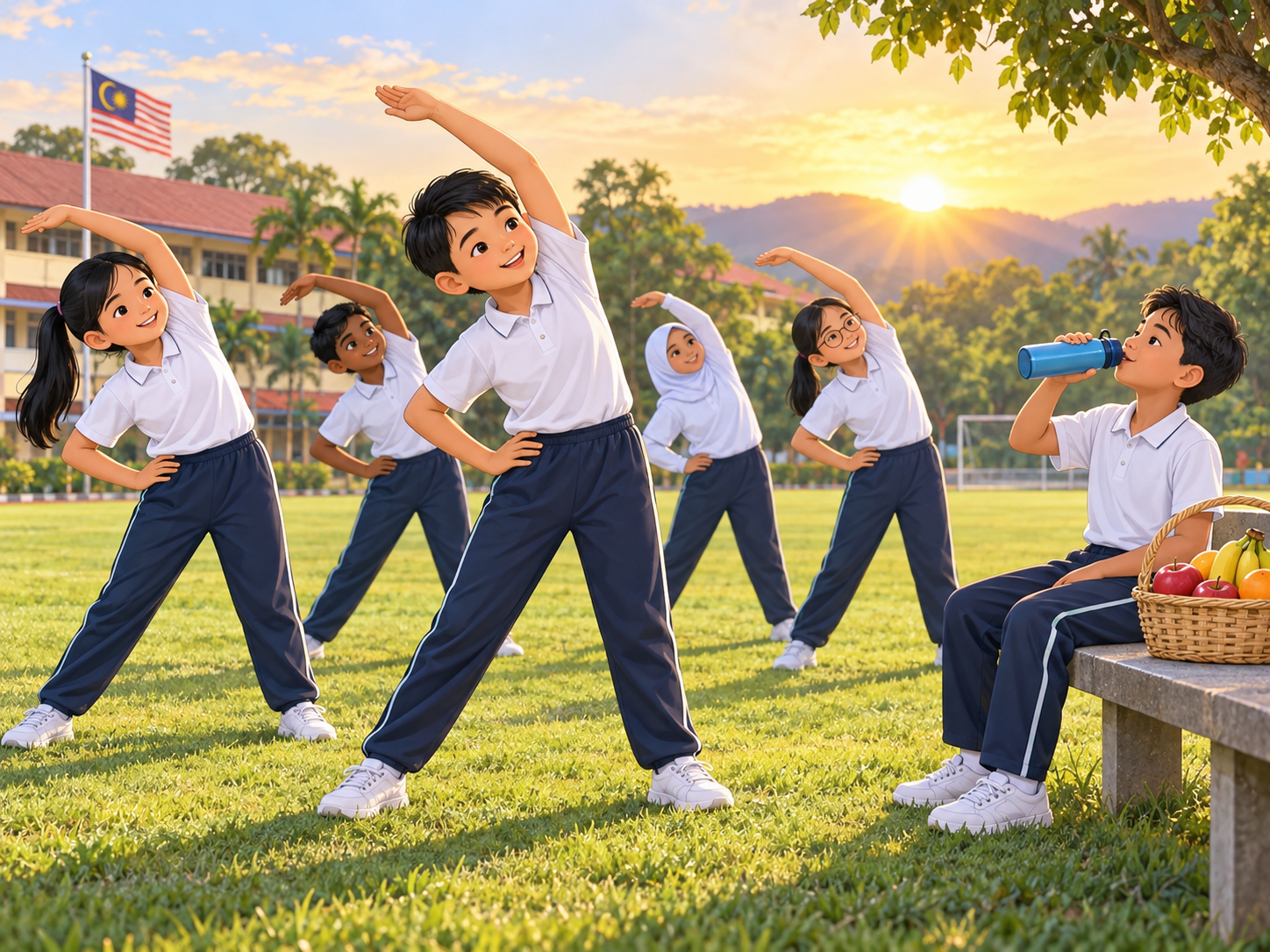
Regangkan tubuh penuh pedoman,
Riadah ringan di tepi taman,
Badan cergas hati pun aman.
syair = 诗歌(syair)
创作 syair 时,每节通常安排四行,并让语音节奏较为整齐。内容要围绕同一主题,语言优美而有礼,不能为了押韵而写出错误健康信息。朗诵时注意停顿,让每行劝告清楚传达。
例子: 以晨起活动为主题,可依次写伸展、在公园轻松运动、精神良好和健康生活,四行意思互相衔接。
syair = traditional quatrain verse
A syair stanza normally uses four lines with a steady rhythm. Keep every line connected to one health theme and choose courteous, expressive words. Rhyme should never force inaccurate health advice; when presenting, pause clearly so each recommendation can be understood.
Example: A morning-health stanza can connect stretching, light exercise in the park, feeling alert, and maintaining an active routine.
Kata Kerja Transitif dan Tak Transitif
Kata kerja transitif memerlukan objek. Kata kerja tak transitif boleh berdiri tanpa objek, walaupun sesetengahnya diikuti pelengkap atau keterangan.
kata kerja transitif = 及物动词
及物动词后面需要宾语来完成意思,例如 mengangkat botol;不及物动词可以不带宾语,例如 bersenam。判断时先找动作词,再问“动作作用在什么对象上”。地点或时间说明不一定是宾语。
例子: 句子“Mira mengangkat botol”中的 botol 是宾语;“Mira bersenam di halaman”没有宾语。
kata kerja transitif = transitive verb
A transitive verb needs an object to complete its meaning, while an intransitive verb can stand without one. Locate the action, then ask what receives that action. A phrase showing place or time may add information, but it is not automatically an object.
Example: In “Mira mengangkat botol,” “botol” is the object; “Mira bersenam di halaman” has no object.
Semak Cepat
Farid membaca poster yang menyarankan rehat skrin dan pencahayaan baik. Dia mengikut kedua-dua panduan itu setiap hari. Ramalan manakah paling berasas?
ramalan berasas = 有根据的预测
题目要求从海报建议和人物行动推想可能的结果,不是选择最肯定或最夸张的句子。先圈出“休息屏幕”和“光线良好”两个线索,再找与眼睛舒适直接相关、语气不过度绝对的选项。
例子: 看到“每天遵守护眼建议”,可预测眼睛可能较不容易疲劳,但不能保证所有健康问题都消失。
ramalan berasas = evidence-based prediction
The item asks for a likely outcome supported by the poster and Farid’s actions. Focus on the clues about screen breaks and suitable lighting, then choose a result directly connected to eye comfort. Avoid absolute claims or outcomes unrelated to the evidence.
Example: Following eye-care guidance may reduce tiredness, but it cannot guarantee that every health need disappears.
Sedia untuk Berlatih
Anda telah melalui lima kemahiran bahasa dan satu semakan kefahaman. Teruskan dengan latihan pengukuhan.
Buka latihan kendiri →健康推理总结 = rumusan penaakulan kesihatan
完成 Unit 4 后,你应能从口头与多媒体线索归纳重点,并写出不过度夸大的预测。记录资料时区分事实与新想法,创作 syair 时兼顾内容、节奏与礼貌;语法上则能判断动作后是否需要宾语。
例子: 看到护眼行动后,先指出线索,再用“可能”说明合理结果。
health reasoning summary = rumusan penaakulan kesihatan
After Unit 4, you should draw a conclusion from spoken or multimedia clues and make a measured prediction. Separate source facts from generated ideas, shape a courteous syair with a clear message, and decide whether a verb requires an object in its sentence.
Example: When interpreting eye-care actions, cite the clue before stating a likely result with measured language.