Kebersihan Jadikan Amalan
Amalan bersih menjadi kukuh apabila kita mampu menghujahkan sebab, meramal perkembangan cerita, menyemak imlak, menghasilkan cerita dan memilih kata adjektif yang tepat.
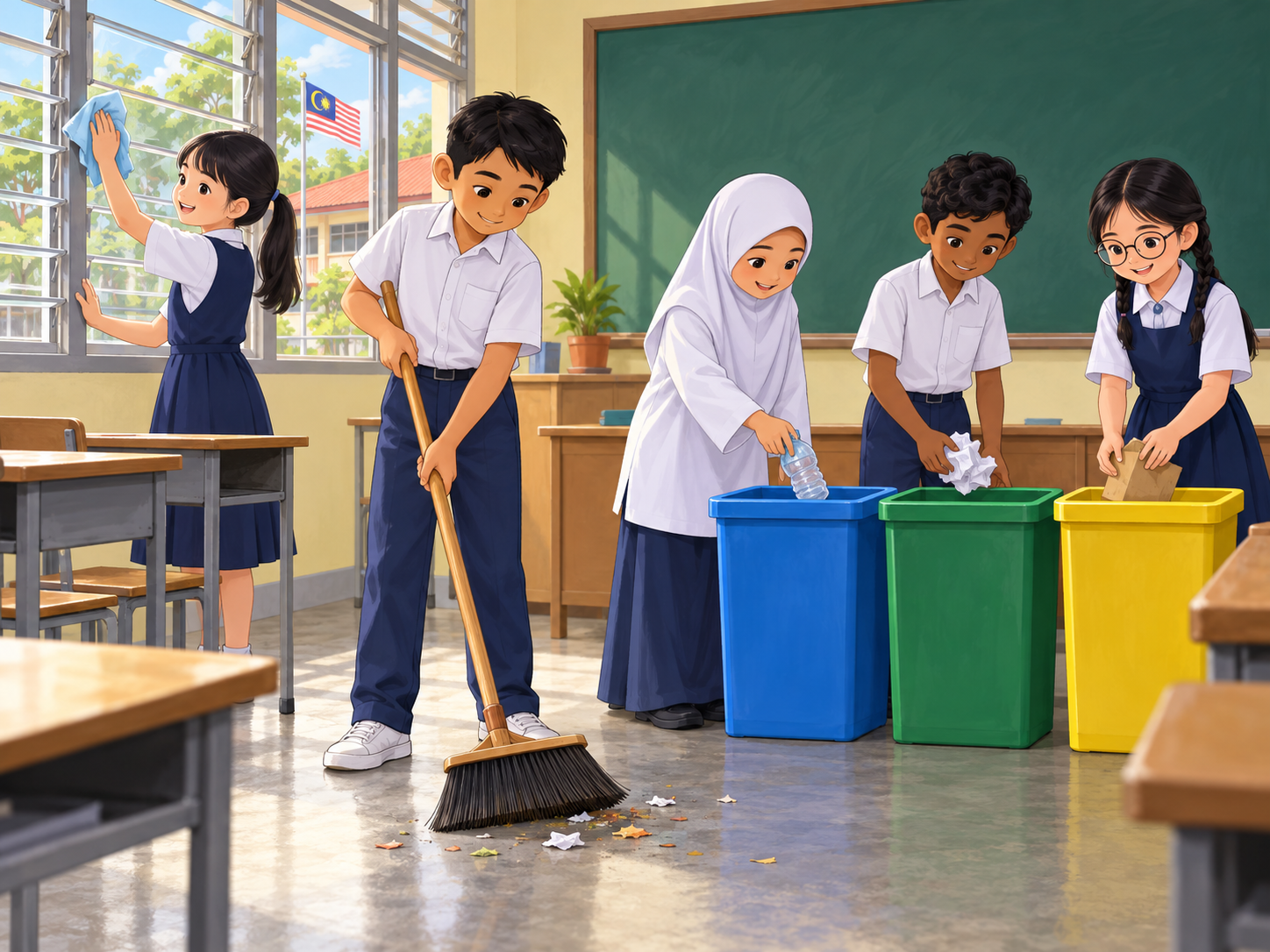
jadikan amalan = 培养成习惯
清洁不是一次性的行动,而是有次序、能坚持的日常习惯。你会从明示和隐含信息建立论点,也会分析故事线索、检查听写内容,并用形容词写出清楚的观察。每项任务都要求理由与语言证据。
例子: 若课室每天依步骤整理,可说明这项做法怎样让责任更明确并减少遗漏。
jadikan amalan = make it a habit
Cleanliness becomes meaningful when it is organised and repeated, not performed once. You will build an argument from explicit and implied information, predict a story, check dictated writing, and use precise adjectives. Every task requires a reason supported by language evidence.
Example: If a classroom follows a daily cleaning sequence, explain how the routine clarifies responsibility and prevents missed tasks.
Hujah Kritis dan Kreatif
Hujah yang baik menyatakan pendirian, alasan dan bukti. Dalam Amalan 5S, Sisih bermaksud mengasingkan barang yang tidak diperlukan, Susun meletakkan barang secara teratur, Sapu membersihkan ruang, Seragam menyeragamkan cara, dan Sentiasa Amal mengekalkan kebiasaan itu.
hujah = 论点
有力的论点先表明立场,再引用明示资料,并解释隐含的影响。创造性不是提出奇特做法,而是在现有条件下给出可执行的改进。论据必须回应主题,不能只表达个人喜好。
例子: 支持每日五分钟整理时,可用“任务更清楚”为理由,再建议轮流检查以减少遗漏。
hujah = argument
A sound argument states a position, cites explicit information, and explains an implied effect. Creativity means proposing a workable improvement within the situation, not an unusual idea for its own sake. Evidence and reasoning must remain connected to the issue.
Example: Support a five-minute cleaning routine because duties become clearer, then propose a rotating check to catch missed areas.
Analisis Cerita dan Buat Ramalan
Teliti watak, masalah, tindakan dan perubahan. Ramalan kesinambungan perlu sepadan dengan sifat watak serta peristiwa yang sudah berlaku.
kesinambungan cerita = 故事发展
预测故事发展时,要同时考虑人物性格、问题和刚发生的行动。合理的下一步会延续因果关系,而不是突然换地点或加入新人物。写答案时指出一个线索,说明它怎样支持预测。
例子: 人物看到灰尘后拿起湿布,所以下一步可能是先擦净箱子再整理。
kesinambungan cerita = story continuation
To predict a story continuation, consider the character, the problem, and the most recent action. A reasonable next event extends the cause-and-effect chain instead of introducing an unrelated setting or person. Name one clue and explain how it supports the prediction.
Example: When a character notices dust and picks up a damp cloth, cleaning the box is a logical next step.
Tulis dan Semak Imlak
Semasa imlak, dengar satu frasa lengkap, tulis dengan tenang, kemudian semak ejaan, huruf besar dan tanda baca selepas bacaan diulang.
imlak = 听写
听写时先听完一个有意义的词组,再写下来,不要因追一个词而漏掉后文。第二次聆听用来检查拼写、大写和标点。完成后逐词对照声音,特别留意词缀和句子开头。
例子: 听到“Selepas hujan lebat”后要保留逗号,并把句首字母写成大写。
imlak = dictation
During dictation, listen for a complete phrase before writing so that one difficult word does not make you miss the rest. Use the repeated reading to check spelling, capital letters, and punctuation. Finally compare each written word with the sounds you heard.
Example: In “Selepas hujan lebat, ...” retain the comma and capitalise the first word.
Hasilkan Cerita Kebersihan
Cerita yang menarik mempunyai permulaan, masalah, tindakan dan penyelesaian. Gunakan bahasa yang indah dan santun, kemudian persembahkan dengan suara yang sesuai.
jalan cerita = 情节
清洁故事要有清楚的开端、问题、行动和结局。描写可以生动,但人物处理问题时应使用礼貌合作的语言。讲述时改变语调来区分发现问题、采取行动和解决后的感受。
例子: 故事可从阅读角有异味开始,接着写同学合作清理,最后说明环境恢复舒适。
jalan cerita = plot
A cleanliness story needs a clear beginning, problem, action, and resolution. Descriptions may be vivid, but characters should cooperate with courteous language. When presenting, vary the voice to distinguish discovering the problem, taking action, and feeling relief after it is solved.
Example: Begin with a musty reading corner, show pupils cleaning together, and end when the area becomes comfortable again.
Kata Adjektif yang Tepat
Kata adjektif menerangkan sifat atau keadaan, ukuran, warna dan pancaindera. Pilih jenis yang benar-benar menerangkan kata nama dalam konteks.
kata adjektif = 形容词
形容词说明名词的性质或状态、大小、颜色与感官特征。选择时先找被说明的名词,再判断句子需要哪一种特征。一个词可能在不同语境有不同作用,所以必须读完整句子。
例子: “lantai licin”说明状态,“tong besar”说明大小,“bilik harum”说明嗅觉感受。
kata adjektif = adjective
An adjective describes a noun through quality or condition, size, colour, or sensory impression. Locate the noun first, then decide which kind of detail the sentence needs. Read the whole context because a familiar word may serve a different role elsewhere.
Example: “Lantai licin” gives a condition, “tong besar” gives size, and “bilik harum” gives a smell.
Semak Cepat
Kelas 6 Amanah mencatat tugas harian, tetapi dua sudut masih sering terlepas. Hujah manakah paling lengkap?
hujah lengkap = 完整论点
完整论点要回应现有做法和“两个角落遗漏”的问题。先判断哪一句有明确立场,再检查是否提出根据和可行改进。只评论颜色或发出没有理由的命令,都不能解决题意。
例子: 保留值日表并加入轮流检查,能针对遗漏的问题提出改进,但题目不要求你指出选项位置。
hujah lengkap = complete argument
A complete argument must respond to the current routine and the problem of two missed corners. Look for a clear position, relevant reasoning, and a workable improvement. A comment about colour or an unexplained command does not address what the class needs.
Example: Keeping the schedule while adding a rotating inspection directly targets the missed areas, without relying on an unrelated detail.
Sedia untuk Berlatih
Anda telah melalui lima kemahiran bahasa dan satu semakan kefahaman. Teruskan dengan latihan pengukuhan.
Buka latihan kendiri →清洁语言总结 = rumusan bahasa kebersihan
完成 Unit 5 后,你应能用立场、证据与理由构成论点,并根据人物行动预测故事发展。听写要检查拼写、大写和标点;故事要有问题、行动与结局。形容词必须准确说明状态、大小、颜色或感官。
例子: 写清洁故事时先呈现问题,再写合作行动,最后说明环境怎样改善。
cleanliness language summary = rumusan bahasa kebersihan
After Unit 5, you should build an argument from a position, evidence, and reason, then predict a story from character actions. Check spelling and punctuation in dictation, organise a story through problem and resolution, and choose adjectives for condition, size, colour, or sense.
Example: A cleanliness story can present the problem, show cooperative action, and end with evidence that the environment improved.